
2 posts tagged with "software-engineering"

View All Tags

[Stanford CS146S #5] Multi-Agent Systems & Swarm Orchestration: Coordinating Autonomous Architect, Implementer, and Critic LLMs

· 7 min read
Jaybee
AI & Robotics Engineer

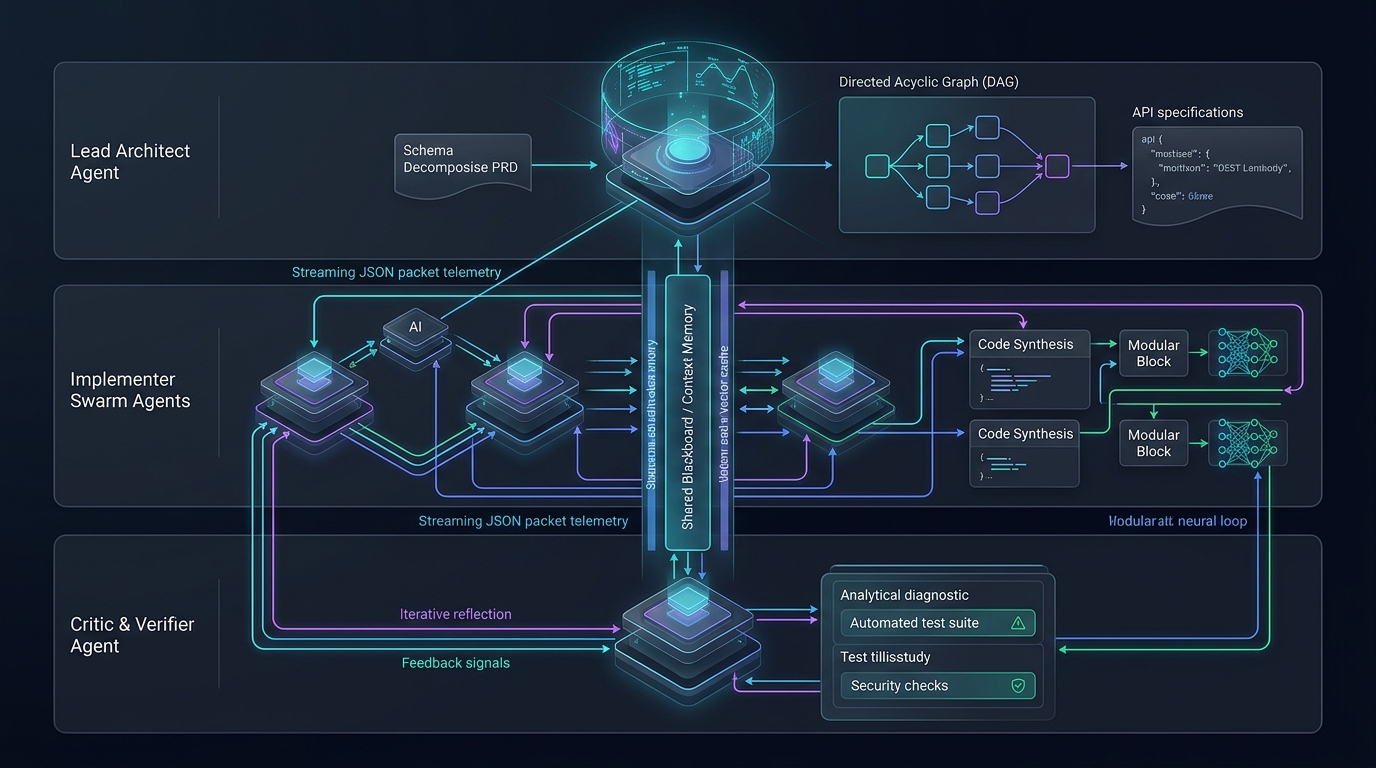
Multi-Agent Swarm Orchestration Architecture

Welcome to Lecture 5 of our deep-dive series covering Stanford University’s CS146S: The Modern Software Developer.

In our previous lectures, we mastered developer prompt engineering, dissected the internal transformer mechanics of coding models, explored tool-use with the Model Context Protocol (MCP), and constructed self-healing spec-driven test harnesses. Each of these paradigms operated under a common implicit assumption: a single primary LLM session interacting with a single developer or IDE workspace.

However, once a software project scales beyond a few thousand lines of code across distributed microservices, the single-agent paradigm fractures. Monolithic agents suffer from context window saturation, attention dilution, and cognitive thrashing.

In today’s lecture, Stanford faculty unveil the future of AI-native engineering: Multi-Agent Systems (MAS) and Swarm Orchestration. We will explore how separating concerns across specialized Architect, Implementer, and Critic roles—coordinated over structured message buses and Directed Acyclic Graphs (DAGs)—delivers order-of-magnitude gains in software generation accuracy and codebase scale.
[Stanford CS146S #4] Spec-Driven Code Generation & Test Harnesses: Building Self-Healing Regression Loops with Claude Code & Cursor

· 9 min read
Jaybee
AI & Robotics Engineer

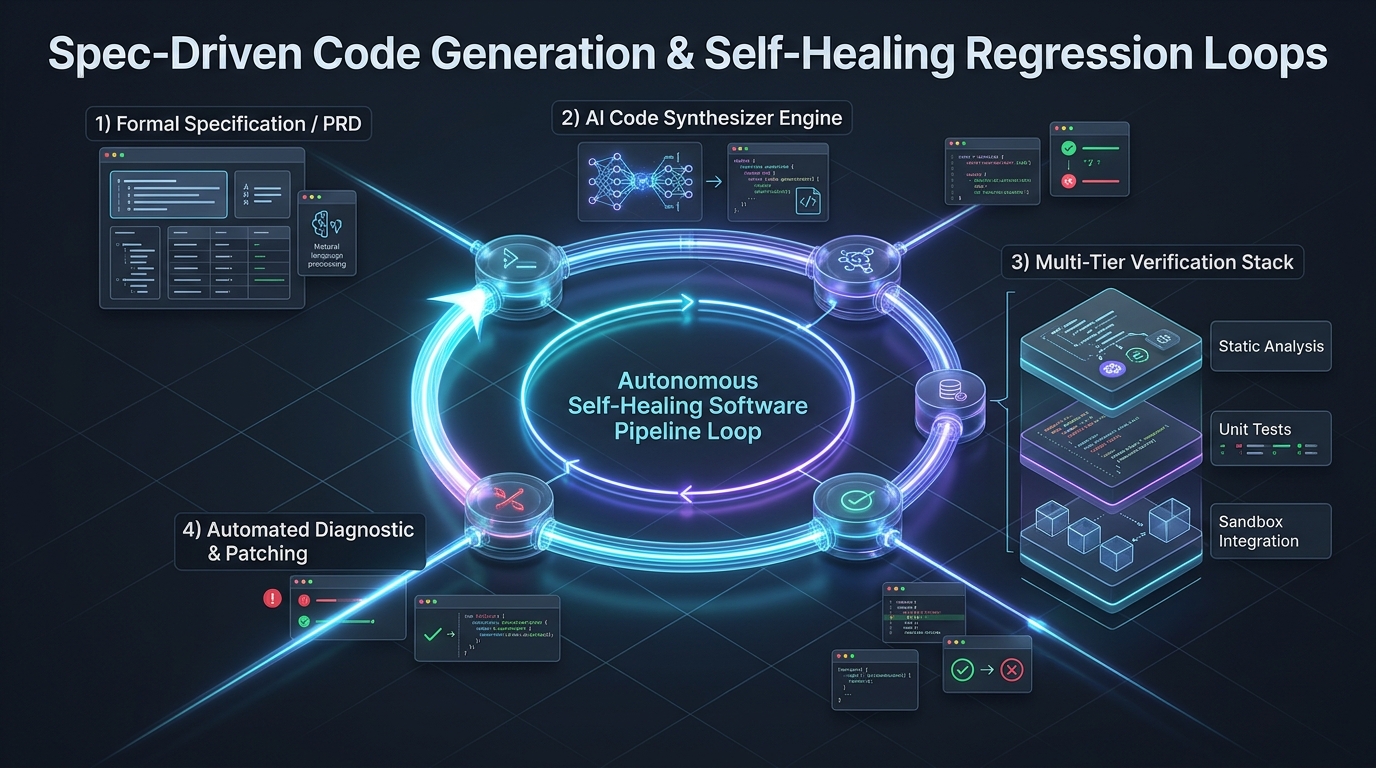
Spec-Driven Code Generation and Self-Healing Test Harness

Welcome to the fourth installment of our comprehensive engineering series analyzing Stanford University's CS146S: The Modern Software Developer.

In Lecture 1, we examined the modern developer stack. In Lecture 2, we unmasked the probabilistic mechanics of coding LLMs. In Lecture 3, we explored the Model Context Protocol (MCP) as the universal connective tissue for autonomous agents. Now, in Lecture 4 (Week 3), the Stanford curriculum addresses the greatest pragmatic challenge facing AI-assisted software teams today: How do we reliably build complex, multi-thousand-line systems when LLMs inevitably hallucinate, introduce silent regressions, and drift from product requirements?

The industry's naive solution—popularized on social media as "vibe coding" or conversational prompt-and-pray—fails completely in mission-critical environments. Drawing directly from Stanford's software engineering laboratory experiments, this lecture outlines Spec-Driven Development (SDD) and demonstrates how to build an automated Test Harness with Self-Healing Feedback Loops using modern tools like Claude Code and Cursor.