
3 posts tagged with "stanford"

View All Tags

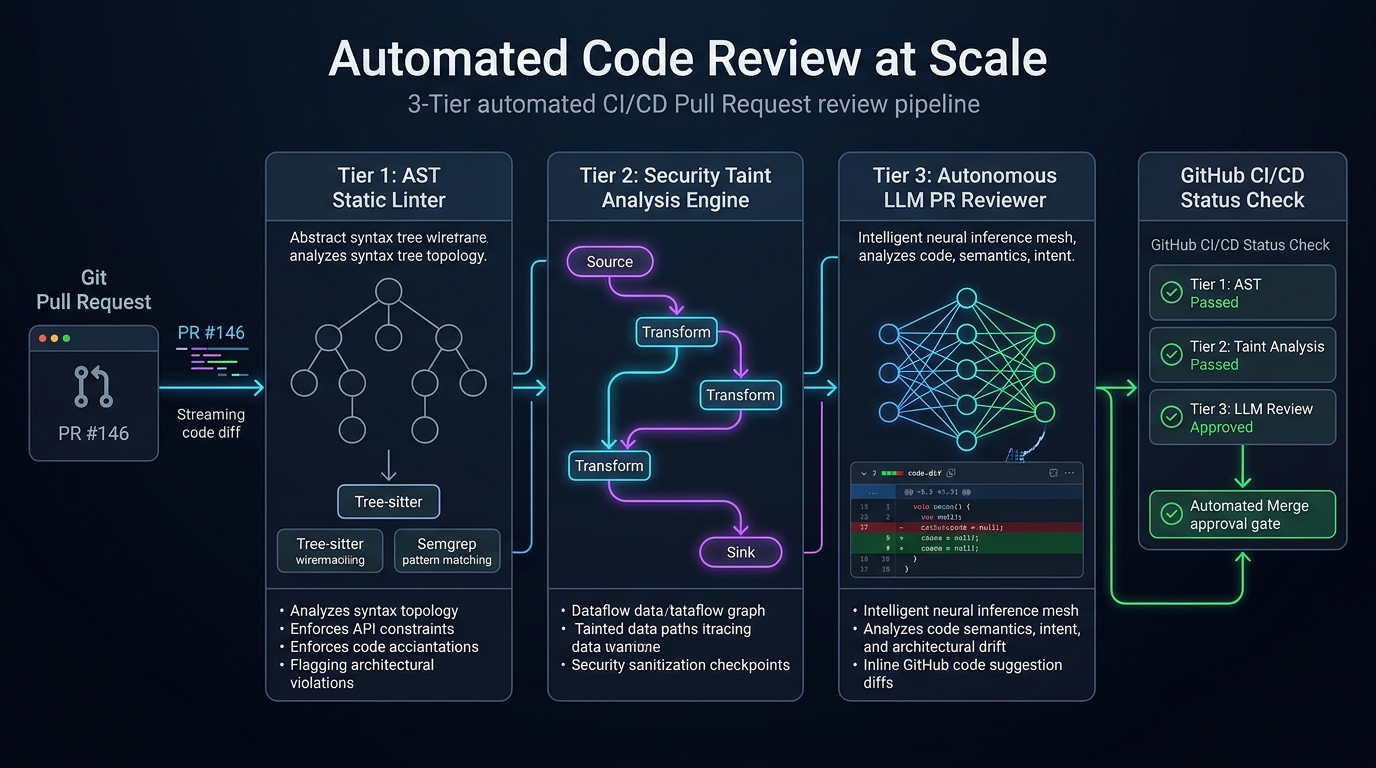
[Stanford CS146S #7] Automated Code Review at Scale: AST-Aware Linters, Security Taint Analysis, and Autonomous LLM PR Reviewers

· 9 min read
Jaybee
AI & Robotics Engineer

Automated Code Review at Scale Architecture

Welcome to Lecture 7 of our deep-dive series covering Stanford University’s CS146S: The Modern Software Developer.

In our previous lecture, we tackled runtime production incidents using eBPF non-intrusive kernel tracing and AI SRE diagnostic hotpatching. Yet, as every seasoned engineering leader knows, the most cost-effective bug is the one that never merges into the mainline branch in the first place.

In high-velocity software engineering organizations, the Pull Request (PR) code review is the primary gatekeeper of software quality, architectural integrity, and security. However, as engineering teams scale, human code review inevitably degenerates into a massive operational bottleneck. Senior engineers spend 15 to 20 hours a week reviewing diffs, burning cognitive bandwidth on trivial stylistic nitpicks (indentation, naming conventions, import ordering) while suffering from review fatigue on massive 1,000-line changes—inevitably waving through insidious concurrency races, SQL injections, and architectural boundary violations.

In today’s lecture, Stanford faculty unveil the blueprint for Automated Code Review at Scale. By constructing a three-tier review hierarchy that couples Abstract Syntax Tree (AST) linters, Inter-procedural Security Taint Analysis, and Autonomous LLM PR Reviewers, modern engineering teams can eliminate 90% of manual code review toil while drastically increasing vulnerability detection rates.
[Stanford CS146S #6] AI-Assisted Debugging & Runtime Profiling: Leveraging eBPF, Dynamic Tracing, and LLMs for Incident Mitigation

· 8 min read
Jaybee
AI & Robotics Engineer

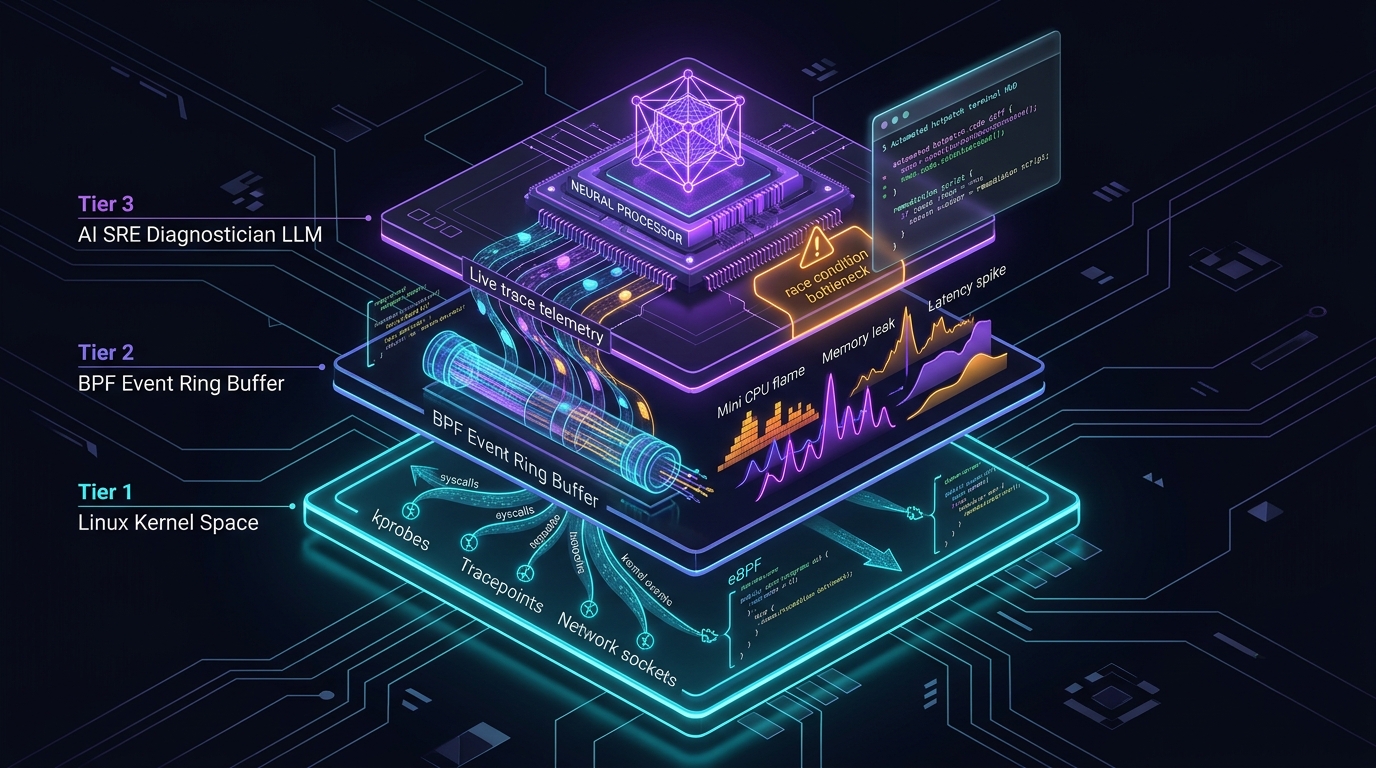
AI-Assisted Debugging and eBPF Dynamic Tracing Architecture

Welcome to Lecture 6 of our deep-dive series covering Stanford University’s CS146S: The Modern Software Developer.

In our preceding lecture, we explored multi-agent swarm orchestration—coordinating Architect, Implementer, and Critic LLMs through structured DAG workflows to write massive modular codebases. Yet, even the most rigorously tested software eventually encounters the chaotic crucible of production.

At 3:00 AM, when an obscure concurrency deadlock freezes a distributed payment cluster or an unindexed database query causes tail latency to spike to 12 seconds, traditional developer debugging workflows collapse. Static analysis cannot predict dynamic race conditions, invasive printf debugging introduces the Heisenbug effect (altering timing and masking the bug), and distributed APM tracing tools drown Site Reliability Engineers (SREs) in gigabytes of unstructured log noise.

In today's lecture, Stanford faculty unveil the next frontier in autonomous software resilience: AI-Assisted Debugging & Runtime Profiling. By combining the zero-overhead, non-intrusive power of extended Berkeley Packet Filters (eBPF) with specialized LLM Diagnostic SRE Agents, modern engineering teams can capture kernel-level execution states in real-time, perform automated root-cause identification, and synthesize hotfixes in minutes rather than hours.

[Stanford CS146S #5] Multi-Agent Systems & Swarm Orchestration: Coordinating Autonomous Architect, Implementer, and Critic LLMs

· 7 min read
Jaybee
AI & Robotics Engineer

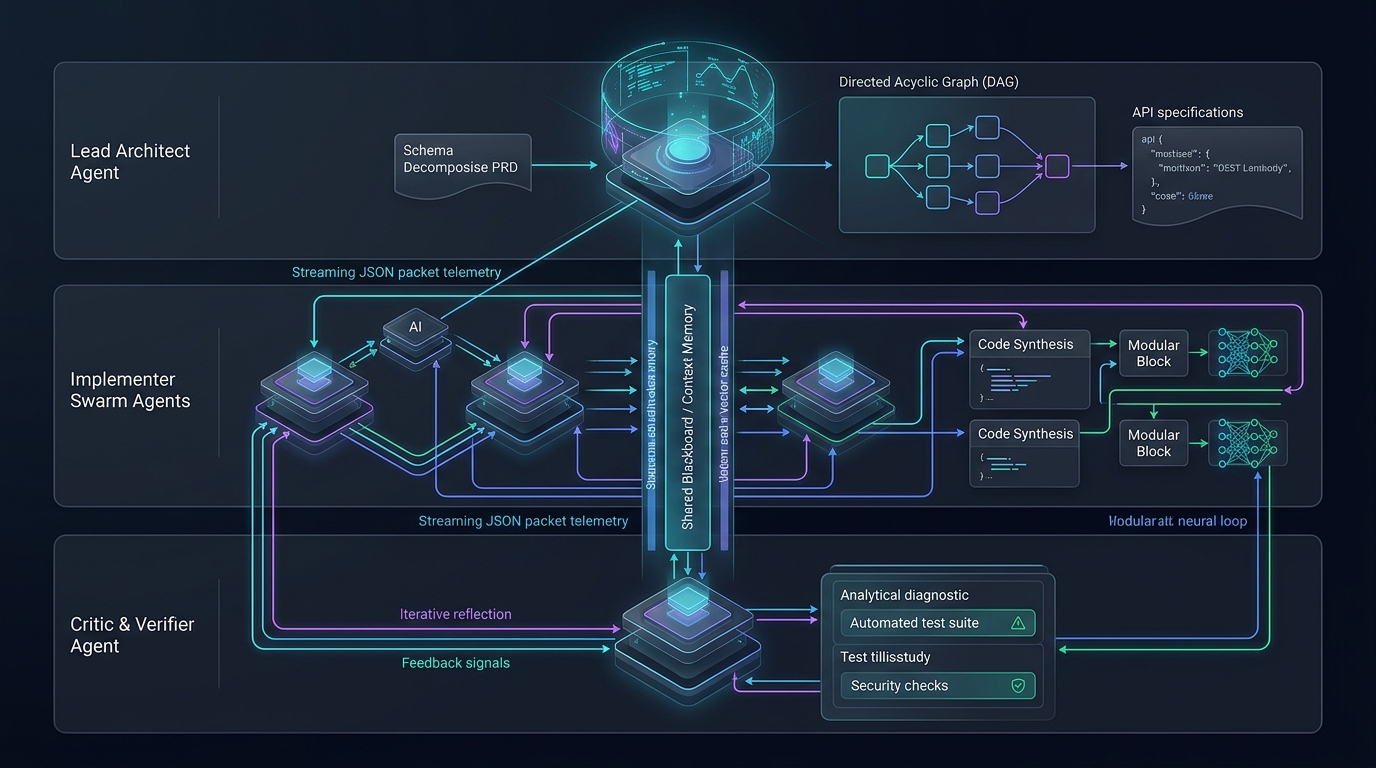
Multi-Agent Swarm Orchestration Architecture

Welcome to Lecture 5 of our deep-dive series covering Stanford University’s CS146S: The Modern Software Developer.

In our previous lectures, we mastered developer prompt engineering, dissected the internal transformer mechanics of coding models, explored tool-use with the Model Context Protocol (MCP), and constructed self-healing spec-driven test harnesses. Each of these paradigms operated under a common implicit assumption: a single primary LLM session interacting with a single developer or IDE workspace.

However, once a software project scales beyond a few thousand lines of code across distributed microservices, the single-agent paradigm fractures. Monolithic agents suffer from context window saturation, attention dilution, and cognitive thrashing.

In today’s lecture, Stanford faculty unveil the future of AI-native engineering: Multi-Agent Systems (MAS) and Swarm Orchestration. We will explore how separating concerns across specialized Architect, Implementer, and Critic roles—coordinated over structured message buses and Directed Acyclic Graphs (DAGs)—delivers order-of-magnitude gains in software generation accuracy and codebase scale.