Pular para o conteúdo principal

5 publicações com a etiqueta "claude-code"

Ver todas as etiquetas

[Stanford CS146S #4] Geração de Código Orientada por Especificação & Test Harnesses: Loops Autocicatrizantes de Regressão com Claude Code & Cursor

· 4 min para ler
Jaybee
AI & Robotics Engineer

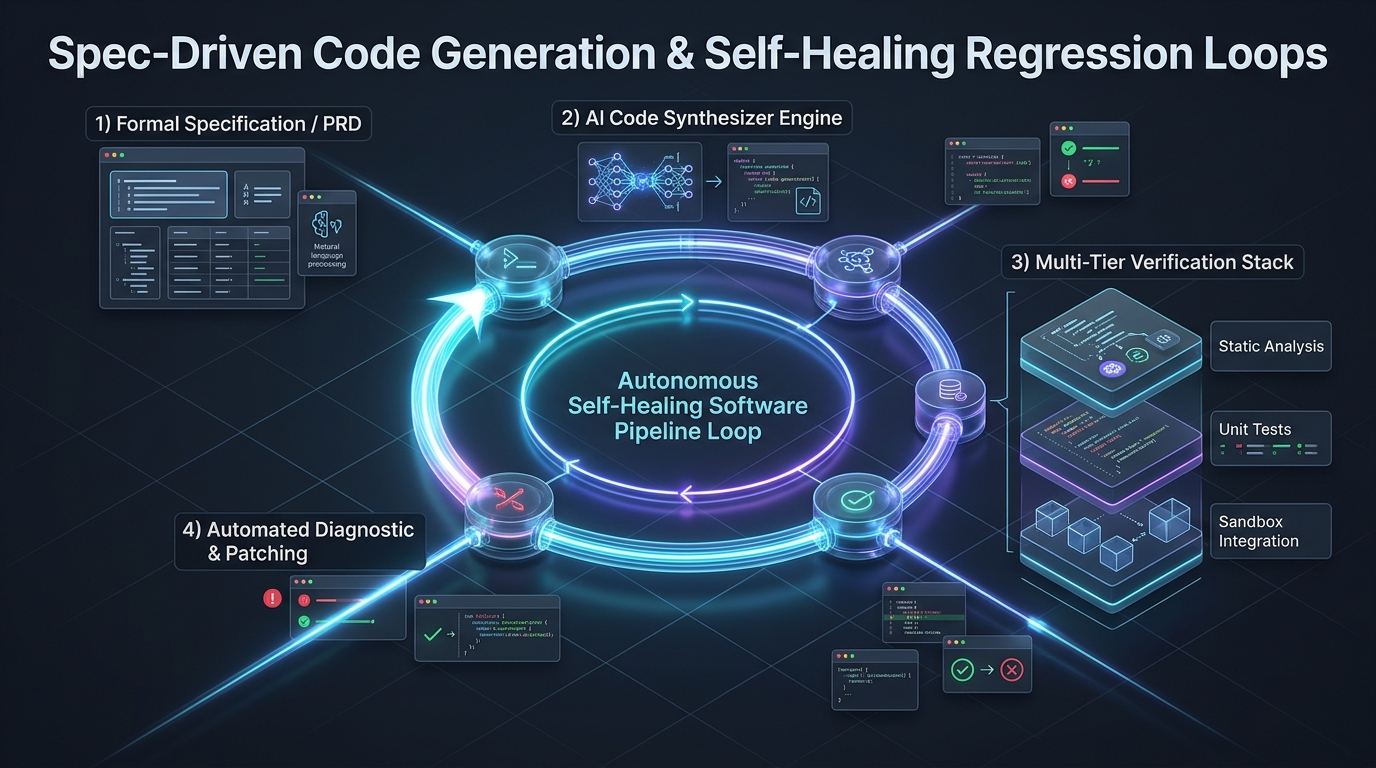
Geração de Código Orientada por Especificação e Test Harness Autocicatrizante

Bem-vindo à quarta parte da nossa análise técnica da série CS146S: The Modern Software Developer da Universidade de Stanford.

Nas aulas anteriores, exploramos a mentalidade de maestro de IA, o funcionamento interno dos modelos de linguagem e o Model Context Protocol (MCP). Na Aula 4 (Semana 3), o curso enfrenta o desafio de engenharia mais urgente das equipes de tecnologia: Como construir sistemas de software corporativos de milhares de linhas com confiabilidade, quando os LLMs inevitavelmente alucinam, introduzem regressões silenciosas e se desviam dos requisitos de produto?

A abordagem ingênua — popularmente chamada nas redes sociais de "Vibe Coding" ou prompt conversacional desestruturado — falha de forma catastrófica em ambientes de missão crítica. Com base em experimentos de laboratório de Stanford, esta aula formaliza o Spec-Driven Development (SDD) e ensina a implementar um Test Harness automatizado com loops de feedback autocicatrizantes (Self-Healing Loops) usando ferramentas modernas como Claude Code e Cursor.
[Stanford CS146S #3] Model Context Protocol (MCP) & Autonomous Tool Use: The Universal Language Server Architecture for AI Agents

· 9 min para ler
Jaybee
AI & Robotics Engineer

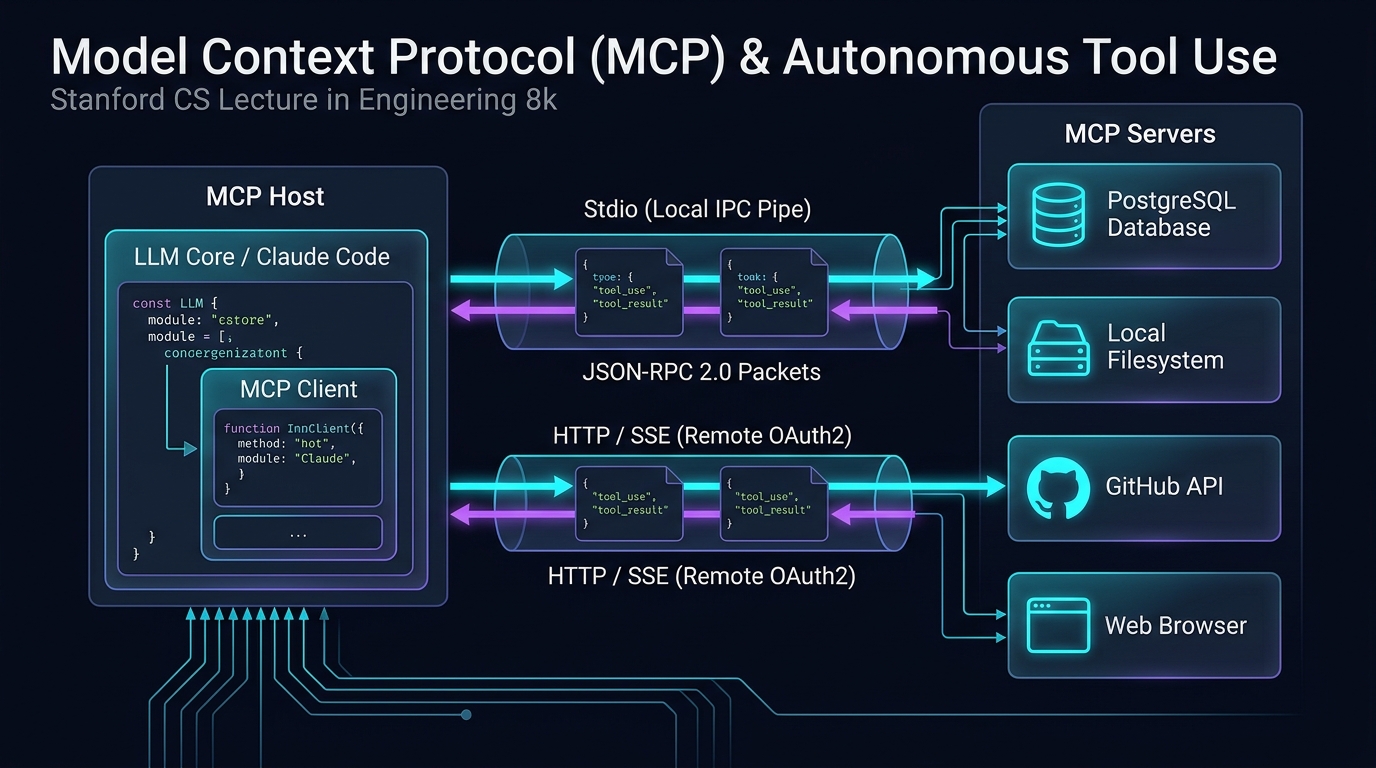
Model Context Protocol Architecture

Welcome to the third installment of our deep-dive engineering series on Stanford University's CS146S: The Modern Software Developer.

In Lecture 1, we established the paradigm shift from syntax typist to agent conductor. In Lecture 2, we examined the probabilistic nature of coding LLMs and the defensive "Trust but Verify" harness. In Lecture 3 (Week 2), the curriculum addresses the single greatest architectural bottleneck in modern AI systems: How do isolated foundation models safely and modularly interact with the external world?

Before 2024, connecting an LLM to a database, terminal, or GitHub API required fragile, bespoke integration glue. Drawing directly from Anthropic's open standard specification and Stanford's distributed systems analysis, this lecture unpacks the Model Context Protocol (MCP)—the universal adapter that is doing for autonomous AI agents what the Language Server Protocol (LSP) did for modern code editors.

[Diário de Bordo Maeumjigi Capstone #3] Teste de Build do Aplicativo e Início do Pré-processamento para Fine-Tuning

· 3 min para ler
Jaybee
AI & Robotics Engineer

Cover Image

This is the record of March 31, when we conducted the Android build test of the MND Convention reservation alarm app, which was the initial direction of the Maeumjigi project, while simultaneously starting the Llama 3.1 fine-tuning data preprocessing, hinting at a full transition into an AI-based project.

[Diário de Bordo Maeumjigi Capstone #2] Concepção Inicial do App de Notificações e Primeiros Testes

· 3 min para ler
Jaybee
AI & Robotics Engineer

Cover Image

This is the record of March 30, when we officially started developing the 'MND Convention Reservation Alarm' application, which was the initial idea for the Maeumjigi project. Based on the coding rules we set last time, we established a detailed project plan and laid the foundation for Test-Driven Development (TDD).

[Diário de Bordo Maeumjigi Capstone #1] Primeiros Passos & Planejamento: Workflows de IA com Claude Code e o Pivot para IA de Saúde Mental

· 5 min para ler
Jaybee
AI & Robotics Engineer

Cover Image

March 26, 2026, marks the historic first day of our university capstone engineering project. Today laid the structural bedrock for everything to come: adopting an autonomous AI coding assistant (Claude Code), designing team collaboration protocols, and making the pivotal architectural decision that transformed a simple reservation alert tool into Maeumjigi, a specialized AI mental health counseling platform.