Pular para o conteúdo principal

2 publicações com a etiqueta "mcp"

Ver todas as etiquetas

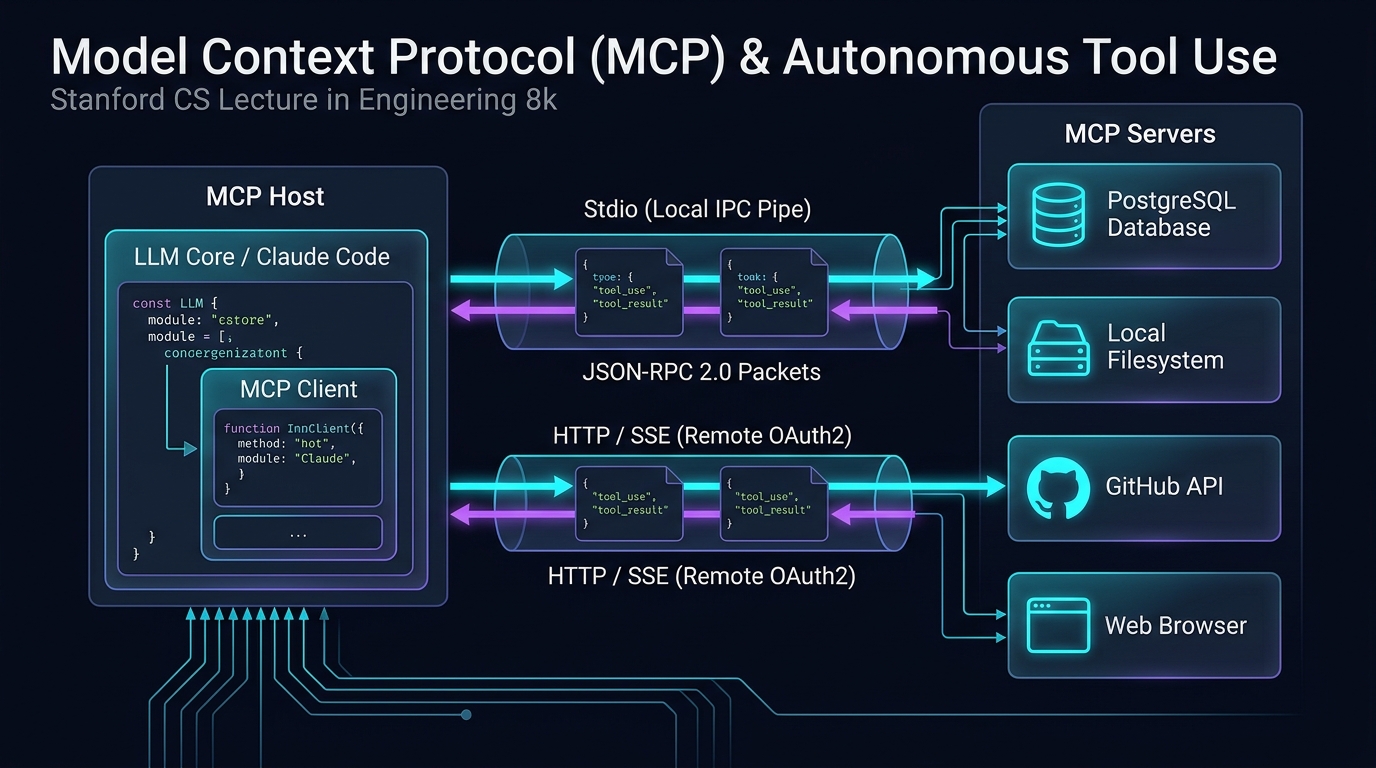
[Stanford CS146S #3] Model Context Protocol (MCP) & Autonomous Tool Use: The Universal Language Server Architecture for AI Agents

· 9 min para ler
Jaybee
AI & Robotics Engineer

Model Context Protocol Architecture

Welcome to the third installment of our deep-dive engineering series on Stanford University's CS146S: The Modern Software Developer.

In Lecture 1, we established the paradigm shift from syntax typist to agent conductor. In Lecture 2, we examined the probabilistic nature of coding LLMs and the defensive "Trust but Verify" harness. In Lecture 3 (Week 2), the curriculum addresses the single greatest architectural bottleneck in modern AI systems: How do isolated foundation models safely and modularly interact with the external world?

Before 2024, connecting an LLM to a database, terminal, or GitHub API required fragile, bespoke integration glue. Drawing directly from Anthropic's open standard specification and Stanford's distributed systems analysis, this lecture unpacks the Model Context Protocol (MCP)—the universal adapter that is doing for autonomous AI agents what the Language Server Protocol (LSP) did for modern code editors.
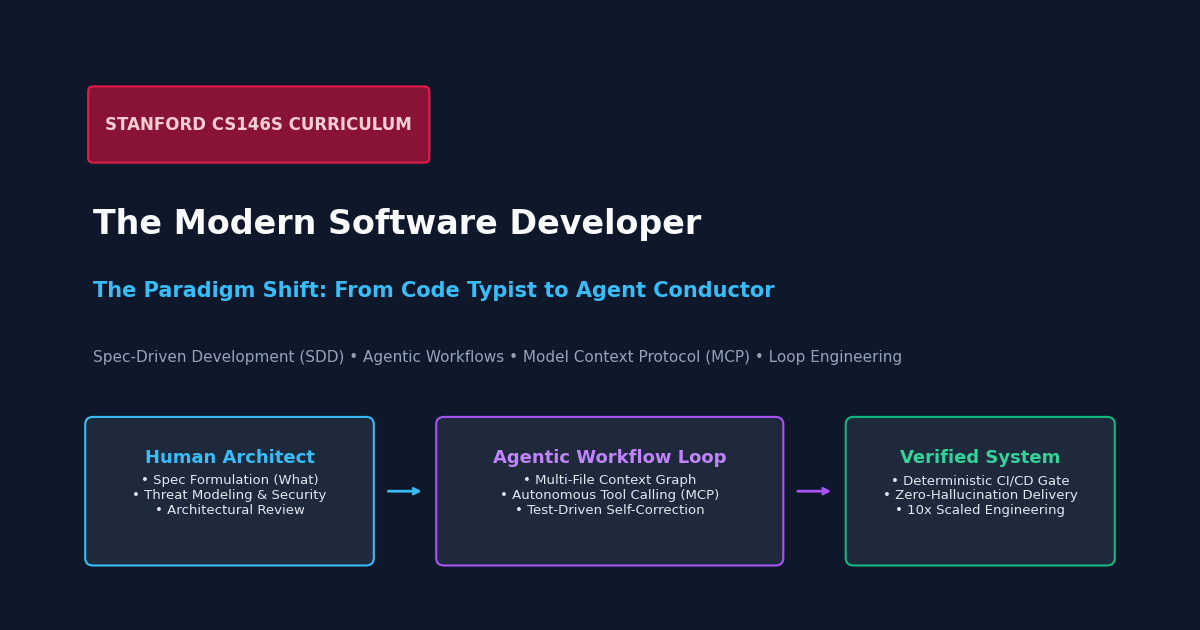
[Stanford CS146S #1] O Desenvolvedor de Software Moderno: A Transição de Digitador de Código para Maestro de Sistemas na Era dos Agentes de IA Autônomos

· 9 min para ler
Jaybee
AI & Robotics Engineer

Stanford CS146S Desenvolvedor de Software Moderno

Bem-vindo à análise técnica aprofundada da série de palestras CS146S: The Modern Software Developer da Universidade de Stanford.

Durante as últimas cinco décadas, a educação em ciência da computação treinou desenvolvedores para serem essencialmente digitadores de sintaxe meticulosos: memorizar estruturas de linguagens, escrever algoritmos manualmente e produzir milhares de linhas de código boilerplate. Hoje, a indústria de software vivencia a transformação mais radical desde a invenção do compilador: a transição da programação manual para a Engenharia Humano-Agente (Human-Agent Engineering).

Nesta aula inaugural, analisamos como empresas líderes em tecnologia (Google, Meta, OpenAI) redefinem a produtividade dos desenvolvedores, por que o engenheiro evolui de digitador de código para maestro de orquestra e como o Desenvolvimento Orientado por Especificação (Spec-Driven Development - SDD), os Fluxos Agênticos (Agentic Workflows) e o Model Context Protocol (MCP) formam as ferramentas indispensáveis da engenharia moderna.